Journal
Studio · Field note
Aug 4, 2026
12 min read
By Top Notchh Team
Reviewed Sep 1, 2026
Sources: research supported
Regional-language content is a market, not translation
A field note on adapting Indian video content through first-language review, voice, timing, audio, and market-specific measurement for creators.
In brief
- India's language diversity makes one national-language edit an incomplete market strategy.
- Native adaptation changes voice, register, pacing, subtitle timing, examples, and quality review.
- Teams should run market-level experiments instead of publishing universal regional-content ROI claims.
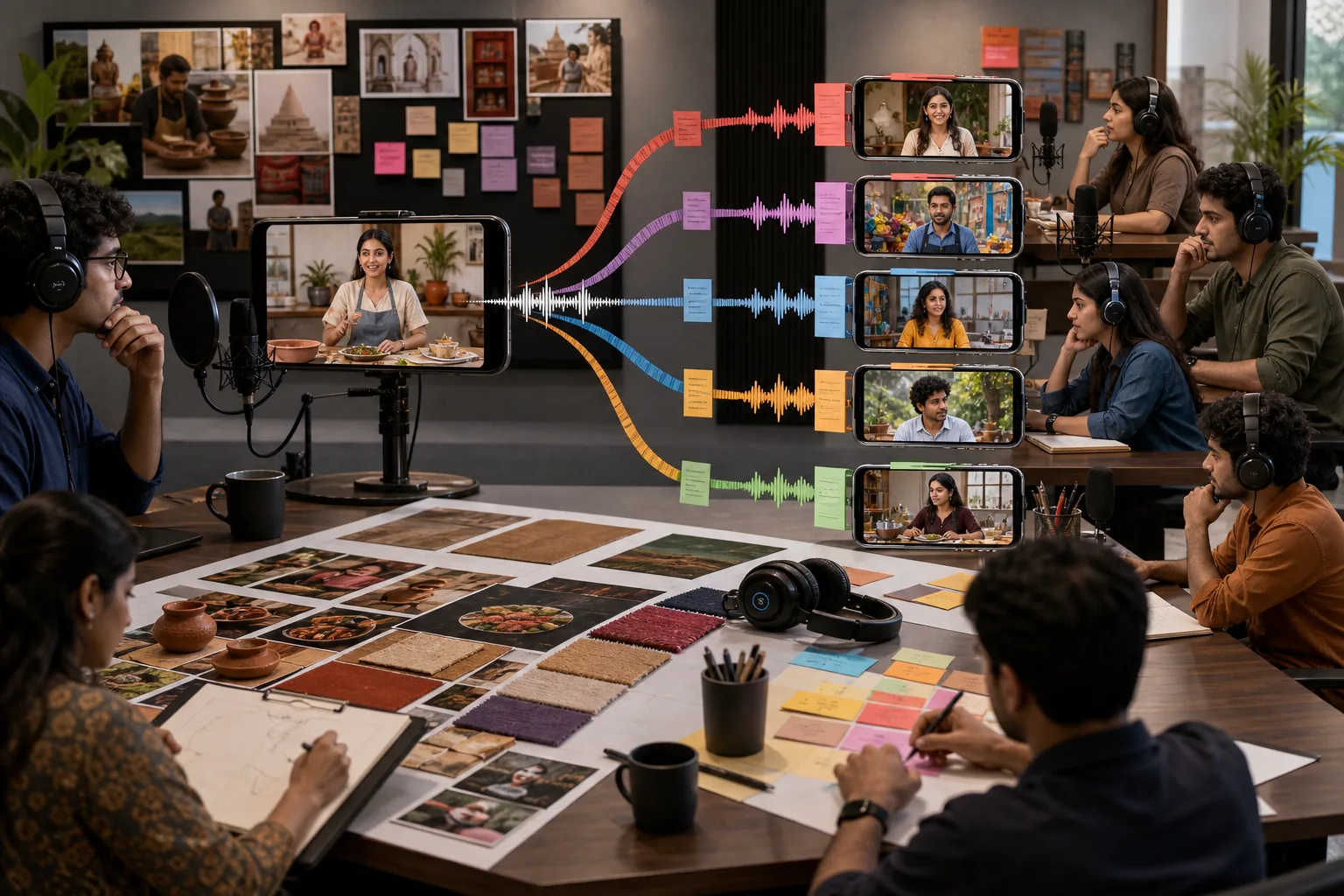
\n\nThere is a specific misconception about the Indian video market that costs creators, edtech companies, and D2C brands more growth than almost anything else they do. The misconception is that India is one audience — that if the content works in Hindi and English, the "national" market is covered, and the regional-language audiences are a nice-to-have you get to after the main growth curve flattens.
The reality is that India is at least eight distinct video markets. Each of them has its own audience of tens of millions of daily active viewers on YouTube, Instagram, and increasingly Meta ads. Each has its own conventions about tone, register, and what a native-sounding voice actually sounds like. Each represents a distinct commercial opportunity that behaves nothing like the Hindi-English market.
The creators, edtech founders, and D2C brands who treat this fact as a strategic reality — not a diversity gesture — outperform their peers by margins that are almost embarrassing to describe.
The specific numbers that most people misread
The commonly cited figure is that India has 22 official languages. The relevant figure for video content is smaller. There are about eight languages where the YouTube monthly-active audience is measured in tens of millions and the daily viewing habits look like a mature market: Hindi, Tamil, Telugu, Marathi, Bengali, Kannada, Malayalam, and — depending on how you count — Bhojpuri and Punjabi as adjacent markets with their own character.
The trap most creators and marketers fall into is treating these as fragments of a larger market rather than as distinct markets that happen to sit inside the same border. A Marathi audience of 90 million active YouTube viewers is not a subset of a Hindi audience. It is a different market. Its viewers have different daily habits, different creators they follow, different tolerance for accents, different expectations about production quality. If you serve them Hindi content with Marathi subtitles, you are showing up in their feed with the wrong package. The algorithm knows this. Your reach is a fraction of what it would be if the content itself was in Marathi.
The commercial implication is uncomfortable for most content operators. Making one video that reaches all of India is not possible with a Hindi original. What is possible is making one video that gets properly localised into six or seven regional versions, each of which then behaves as a first-class piece of content in its own market. That is a different operational model from the one most teams have.
Where the Indian creator economy is quietly heading
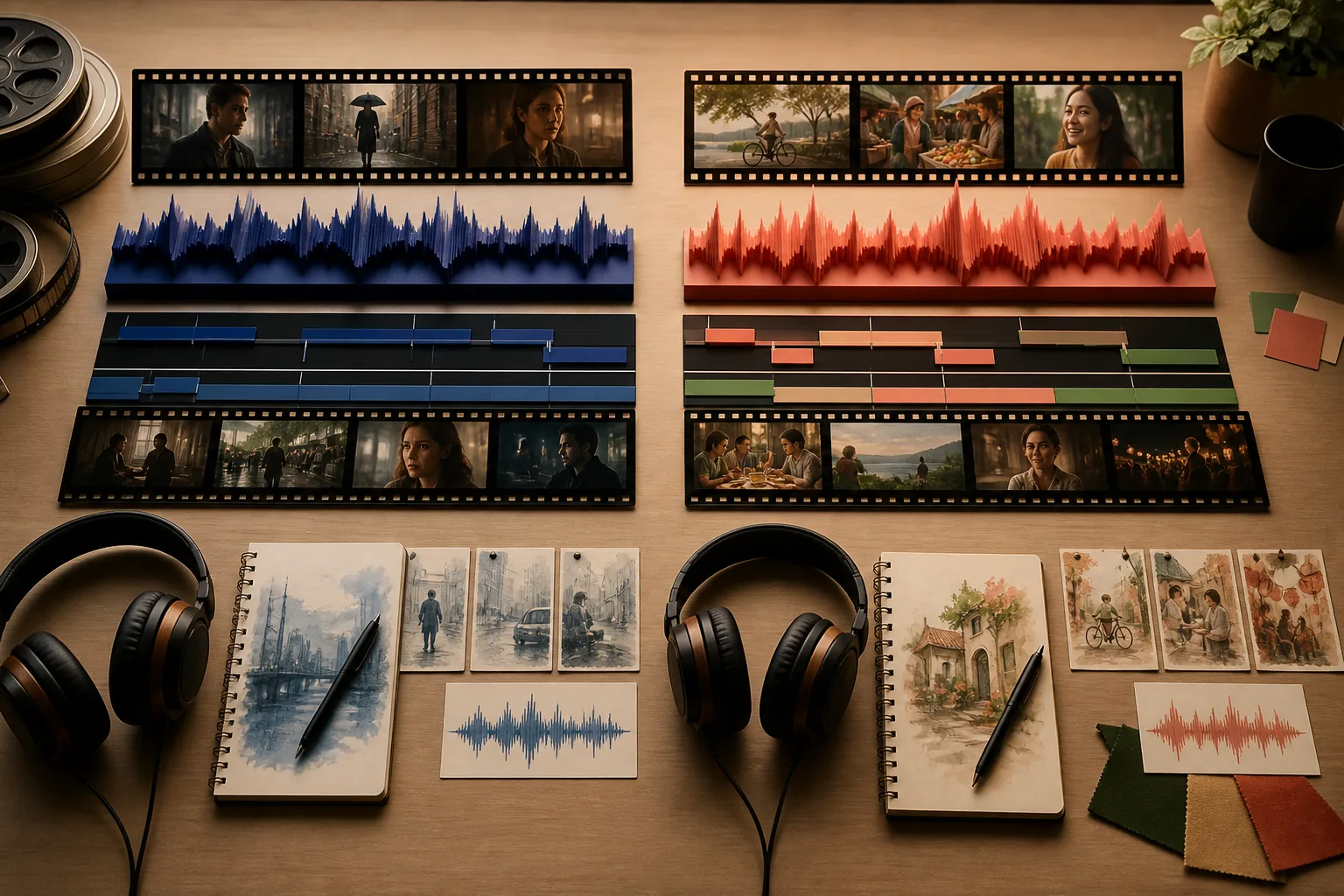
The creators who have grown fastest in the last two years — across the top thousand Indian channels by subscriber velocity — have almost all done one specific thing. They have added regional-language versions of their core content, not as translations, but as native releases into each regional audience's feed.
The pattern is consistent enough to describe as a formula. A creator with a strong Hindi audience of two or three million adds a Tamil channel. Not a Tamil subtitle track — a Tamil channel, with a Tamil voice, with content edited for Tamil pacing conventions and Tamil thumbnails, releasing on a schedule that Tamil audiences expect. Within eighteen months the Tamil channel is at half the Hindi channel's size, growing faster in absolute terms, and monetising at higher per-view revenue because Tamil advertising is less competitive than Hindi.
The same pattern shows up in edtech content, in devotional and spiritual content, in health and wellness content, in finance content, in D2C ad creative. The formula does not care which vertical you're in. It cares whether you have made the operational commitment to release native, not translated.
The reason most creators do not do this is not that they doubt the opportunity. It is that the operational overhead of producing native content in six languages appears to require a team of thirty. The teams that make it work have figured out that this is a solvable problem, and the solution is a specific production pipeline that most creators have not built because nobody sold it to them as a workflow.
What "native" actually requires
The instinct in most localisation projects is to translate the script and hire a voice-over artist. This produces something that sounds like a translation. The audience, within thirty seconds, knows it is watching a translated video. Once they know this, they treat the content as second-rate. They engage less. The algorithm sees the engagement drop and reduces the reach. The creator concludes that regional does not work.
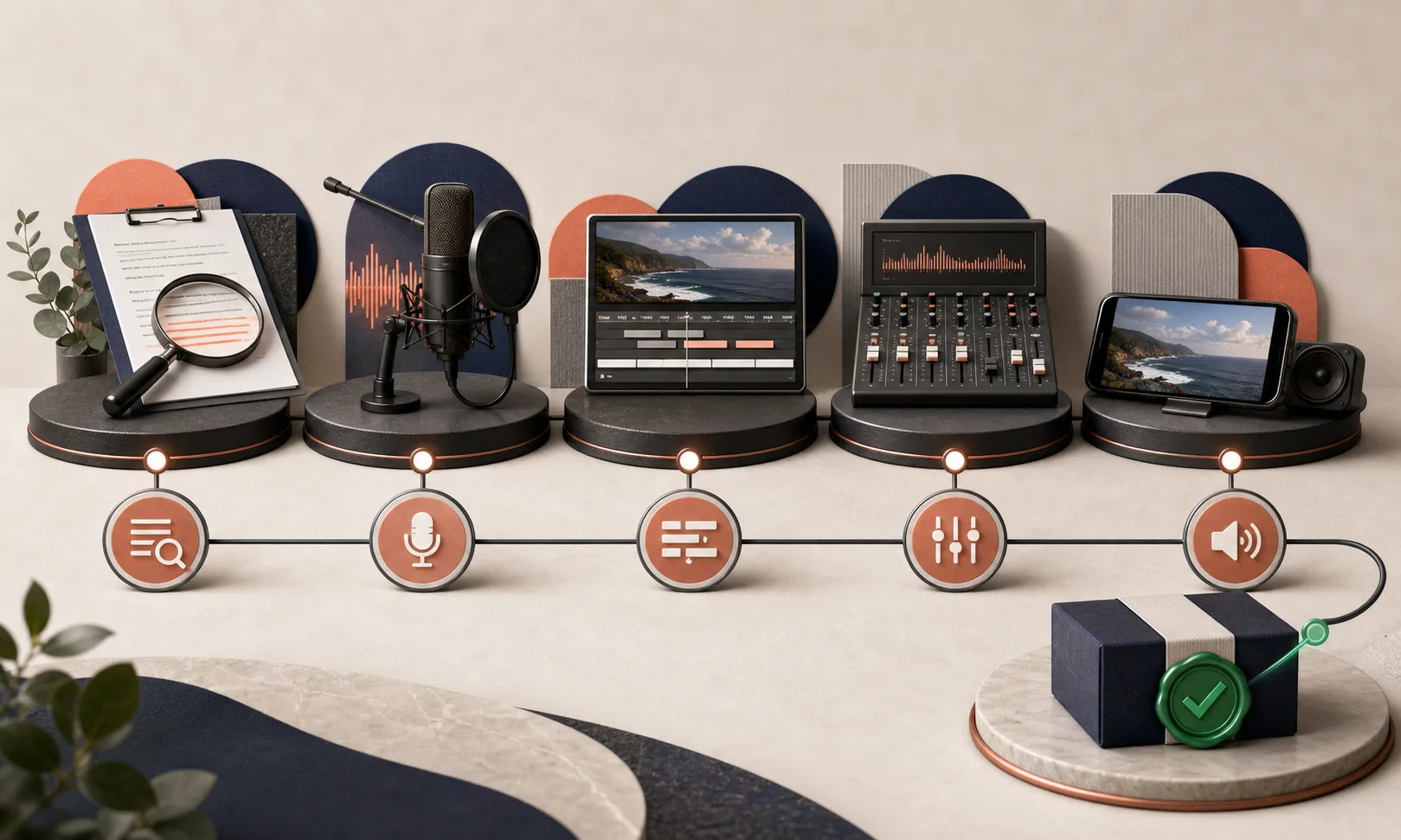
The distinction between a translation and a native-sounding release is craft, not budget. It has five components, each of which most translation vendors get wrong.
Voice register. A good Marathi voice does not sound like a Hindi voice speaking Marathi. It uses different sentence rhythms, different intonation patterns, different silences. A voice actor who has done a hundred Hindi VOs and one Marathi VO will not naturally produce this. A voice actor who does Marathi natively, has grown up watching Marathi cinema, and is chosen for the specific tonal register of the creator's brand will.
Cultural register. A joke that works in Delhi does not work the same way in Kochi. A metaphor about cricket lands differently in Kolkata than it does in Mumbai. The best regional versions of educational content are not translated — they are re-scripted, with the source material's intent preserved and its examples replaced. This is the single most common mistake in edtech localisation. The script is translated verbatim, and the examples remain Delhi-flavoured, and the Chennai audience quietly disengages.
Dialect calibration. There is no such thing as one Tamil, one Bengali, one Marathi. Every language has multiple registers — formal, colloquial, urban, rural. A finance creator serving Tamil audiences needs to pick a register that reads as trustworthy and educated without slipping into a formal literary Tamil that sounds like a textbook. This is a specific casting decision, and it is where most projects unintentionally hire the wrong voice.
Audio production. Regional audiences on Indian mobile networks watch content on speakers, in traffic, in noisy environments. The audio mix has to survive the phone speaker in an auto-rickshaw. Original English or Hindi content is often mixed for a quieter listening environment. A regional dub that keeps the source mix and just replaces the vocals will sound flat and cheap on the destination device. The mix has to be redone.
Pacing. Different language audiences have different tolerance for pause. Tamil and Malayalam audiences will accept a slightly slower pace and a more considered delivery. Hindi audiences on Reels and Shorts have been trained on rapid-fire delivery. The same script, delivered at Hindi pace in Tamil, sounds anxious. Delivered at Tamil pace in Hindi, it sounds slow. Native versions adjust the pace, not just the words.
Get these five components right and the audience does not experience the video as a dub. They experience it as content made for them, by someone who understood them.
What each of the eight languages actually expects
Every regional market has its own set of expectations that a national-Hindi playbook simply does not carry across. A rough operator's map of the eight most-consumed languages in Indian video today:
Open data table
| Language | Register that works | Dialect and casting notes | Watch-context most videos land in |
|---|---|---|---|
| Marathi | Direct, warm, mildly bureaucratic register works for Pune/Mumbai urban. Rural Vidarbha wants a plainer, slower cadence. Loud energy reads as forced. | Female narrator voices from the Pune belt travel well across the state. Rural Marathi (Konkan, Vidarbha) needs specific-region casting or it reads as "Pune trying to sound rural." | Phone speaker on the commute; mid-day feed scroll. Mid-tempo pacing outperforms fast cuts. |
| Tamil | Formal Tamil (செம்மொழி register) for edtech, aspirational D2C, and finance. Colloquial Chennai Tamil for lifestyle, food, entertainment. Mixing the two on the same channel confuses viewers fast. | Chennai-neutral voice for pan-Tamil-Nadu reach; Madurai and Coimbatore variants for regionally-targeted campaigns. Sri Lankan Tamil is a separate audience, not interchangeable. | Long-watch prime time (7–11 PM). Willing to stay on longer video than Hindi audiences do. Subtitles are read even by native speakers. |
| Telugu | Coastal Andhra colloquial Telugu differs from Telangana colloquial Telugu on specific vocabulary. Choose one per asset; do not mix. Formal Telugu (Vijayawada anchor register) works for edtech and finance. | Male voice from Hyderabad works pan-Telugu for youth-skewed content; older audiences prefer coastal Andhra cadences. Punjab-style loud voice-over does not work in Telugu. | Split evenly between phone and Fire-TV/YouTube-on-TV. Vertical Reels and horizontal YouTube both perform. |
| Bengali | Kolkata standard Bengali for pan-West-Bengal reach; Dhaka Bengali is a separate market with different vocabulary and cadence. Do not conflate the two audiences with one dub. | Culturally, the audience is literate and reads subtitle text carefully — sub quality is disproportionately important. Voice-over that sounds "Bombay Bengali" is instantly rejected. | Long-watch, high engagement per view. Comment sections are dense; direct-address videos outperform. |
| Kannada | Bengaluru-neutral Kannada for pan-Karnataka digital reach. Mysore Kannada and North-Karnataka Kannada each shift the register enough to matter for locally-targeted content. | English-code-switching within Kannada is normal for urban Bengaluru; sounds unnatural in rural Karnataka. A single dub cannot serve both. | Second-screen while watching cricket or news. Watch-time is short; hooks must land in the first three seconds. |
| Malayalam | Educated Kerala register works pan-audience because Malayalam schooling is more standardised. Trichur/Kochi cadence for youth-skewed. | Voice-over talent is deeply craft-conscious; low-effort dubs are punished immediately by an audience that grew up on high-quality Malayalam cinema. This is the language where production quality gap is most visible. | High-engagement, long-watch. WhatsApp forwarding of good videos is culturally common. |
| Bhojpuri | Direct, plainspoken, emotional register. Formal Hindi loanwords make it sound "outsider." Song and music-driven content dominates. | Cast Bhojpuri-native voice actors, not Hindi voice actors doing Bhojpuri. The pitch and stress pattern are different enough that Hindi actors sound obviously wrong. | Feature-phone-adjacent audience. Data-cost sensitivity means shorter loads, lower bitrates, and vertical mobile-first framing win. |
| Punjabi | Loud, energetic, direct register. Punjabi audiences reward high energy and reject anything that reads as reserved. | Male voice-over dominates historically but female voice is growing fast in edtech and beauty. Doaba, Malwa, and Majha dialects have visible differences; casting depends on target sub-region. | Music-forward. Even non-music content lands better when the audio bed has rhythm. Watched on speakers as often as on headphones. |
The table is not exhaustive — every one of these languages could carry its own multi-page playbook — but it names the specific texture that gets missed when a team defaults to "translate the Hindi cut into Tamil." A cast, a register, a cadence, and a context choice all have to be made per language before the first line is recorded.
What this means for creators, edtech, and D2C
For creators, the operational question is whether to build the regional pipeline in-house or contract it to a vendor who does this at scale. In-house means hiring six voice actors, a producer per language, and an audio engineer. Contract means finding a vendor who understands the five-component discipline above, not one that treats regional as a translation task. Very few vendors currently operate at this standard. The ones that do have quietly become the primary bottleneck for the fastest-growing regional creator strategies.
For edtech, the question is different. Learning outcomes depend on the language the student thinks in. A student in Coimbatore studying for a competitive exam will absorb Tamil content faster than they will absorb Hindi content, even if their English is strong. The economics of Indian edtech in the next five years are going to be decided by which platforms figured out how to deliver native-quality regional content at the same production velocity as their Hindi flagship. The gap between the platforms that solved this and those that did not will be visible in retention numbers.
For D2C brands, the opportunity is in Meta ad creative. A Hindi ad running against a Tamil audience underperforms. A Tamil ad, native voice, native register, native pacing, against the same Tamil audience, doubles or triples ROAS at similar reach. Most Indian D2C brands do not currently run native regional ad creative because their agencies do not produce it. The brands that solve this ahead of their category outperform their competitors on the Meta bidding curve for a specific and durable reason: they are targeting audiences their competitors are not effectively speaking to.
Signals your regional content is being read as non-native
A short diagnostic. If three or more are true, your regional versions are getting scrolled past even when the impression numbers look fine.
- The regional dub uses the same voice actor's cadence as the Hindi version, only translated.
- Subtitles are auto-translated from Hindi rather than written by a first-language reviewer.
- The regional cut has the same shot pacing as the Hindi cut — no adjustment for how a Tamil or Malayalam audience reads a joke setup.
- Audio mix is stereo/studio-optimised rather than mono/phone-speaker-optimised for the market that consumes on Jio-tier hardware.
- Watch-time on the regional version drops sharply in the first fifteen seconds versus the Hindi version.
- Comments on the regional cut are dominated by "please make in [language]" — meaning viewers do not recognise it as their language.
- Meta ROAS on regional creative underperforms Hindi creative against the same regional audience.
- No named first-language reviewer signs off on each regional asset before publish.
The operator's takeaway
The Indian creator economy, the Indian edtech market, and the Indian D2C advertising market are all moving in the same direction — away from a national Hindi-English strategy and toward a native-per-market strategy that treats each regional language as a first-class audience. The teams that make this transition first, at production quality that reads as native to each audience, are compounding faster than the ones that do not.
The intervention is not to add subtitles. It is to build or contract a production pipeline capable of releasing native versions in the five to eight languages that matter for your specific audience, at a production velocity that keeps up with your English or Hindi flagship. Nobody who has done this well has regretted it. Every creator, edtech founder, and D2C marketer who has done it late has said the same thing: they wish they had started two years earlier.
Regional is not a diversity strategy. It is where most of the next decade's Indian video growth actually lives. The teams that treat it as such get to be there first.
Where Top Notchh fits
This is a Studio field note — the pattern shows up on our radar because it maps directly to a product surface we are researching under the internal name DubKaro. Not marketed yet, and this post is not selling it. If you are a creator, edtech operator, or D2C marketer running into this ceiling and interested in comparing notes as a design partner, reach out.
For more field notes from adjacent operational surfaces, read the other Studio pieces.\n
Evidence ledger
Sources and verification
- C-16 Population by Mother Tongue, Census of India 2011Office of the Registrar General & Census Commissioner, India · research · checked Sep 1, 2026
- Internet in India 2024IAMAI and Kantar · research · checked Sep 1, 2026